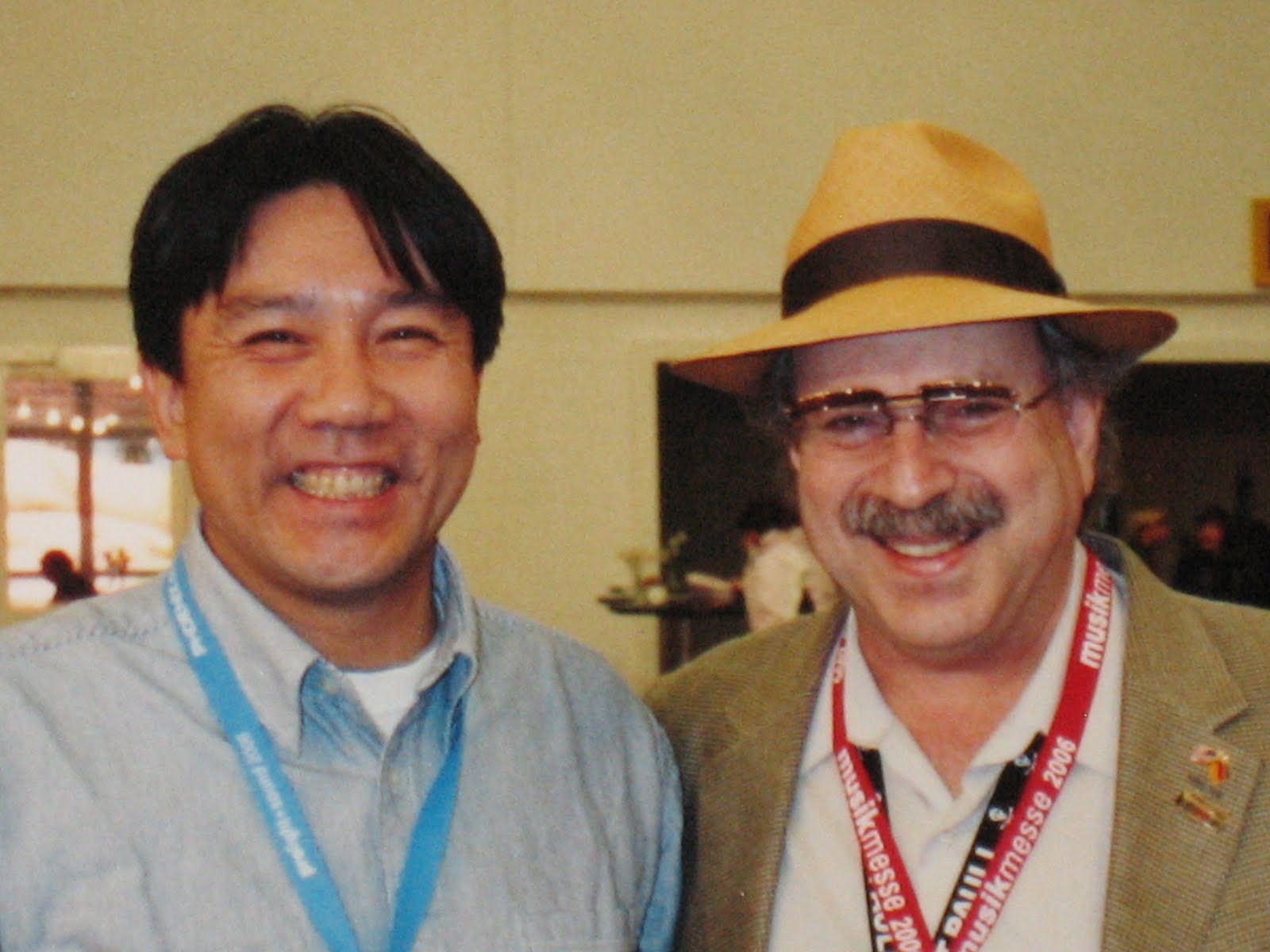
Al Jazzbeaux Collins Movie with Jon Hammond KCSM Jazz 91
*WATCH THE FILM HERE: Al Jazzbeaux Collins Movie With Jon Hammond KCSM Jazz 91 Ver 2.0 Jon's archive https://archive.org/details/AlJazzbeauxCollinsMovieWithJonHammondKCSMJazz91Ver2.0 Youtube https://youtu.be/gYwQvlL8Wmc


 by Jon Hammond
Published June 18, 2015
Usage Attribution-Noncommercial-No Derivative Works 3.0
Topics Al Jazzbeaux Collins, Documentary, Jon Hammond, Movie, Jazz 91, Mississippi Mud, Jazzbo Collins, WNEW 1130 AM, Jazz Radio, #HammondOrgan
The late great radio and TV broadcaster personality Al Jazzbeaux Collins in the studios of KCSM Jazz 91 with organist Jon Hammond - aka Al Jazzbo Collins, one of the greatest and most definitely coolest broadcasters who ever lived. *Note: I dearly miss Jazzbeaux, he was a huge inspiration to me personally. He broke out my music on the air back in New York on WNEW 1130AM huge powerful door he opened for me, we had a lot of fun together on both coasts - he introduced me to folks like Lionel Hampton, David Panama Francis, Lew Anderson band leader and Clarabell the Clown from It's Howdy Doody Time! TV Show, Joe Bushkin pianist, and his Family the Collins Family - he knew every door man garbage man and taxi drivers on the street - rest in peace Albert! sincerely, Jon Hammond *including a clip from Live performance in Horizons Sausalito with funky James Preston drums on Jon Hammond Band https://en.wikipedia.org/wiki/Al_%22Jazzbo%22_Collins Albert Richard "Jazzbo" Collins (born January 4, 1919, Rochester, New York[1] — d. September 30, 1997, Marin County, California) was an American disc jockey, radio personality and recording artist who was briefly the host of NBC television's Tonight show in 1957.
The name "Jazzbo" derived from a product Collins had seen, a clip-on bowtie named Jazzbows. Just as Martin Block created the illusion that he was speaking from the Make Believe Ballroom, Collins claimed to be broadcasting from his inner sanctum, a place known as the Purple Grotto, an imaginary setting suggested by radio station WNEW's interior design, as Collins explained:
I started my broadcast in Studio One which was painted all kinds of tints and shades of purple on huge polycylindricals which were vertically placed around the walls of the room to deflect the sound. It just happened to be that way. And with the turntables and desk and console and the lights turned down low, it had a very cavelike appearance to my imagination. So I got on the air, and the first thing I said was, "Hi, it's Jazzbo in the Purple Grotto." You never know where your thoughts are coming from, but the way it came out was that I was in a grotto, in this atmosphere with stalagtites and a lake and no telephones. I was using Nat Cole underneath me with "Easy Listening Blues" playing piano in the background.
Collins grew up on Long Island, New York. In 1941, while attending the University of Miami in Florida, he substituted as the announcer on his English teacher's campus radio program, and decided he wanted to be in radio. He began his professional career as the disc jockey at a bluegrass station in Logan, West Virginia. By 1943, Collins was broadcasting at WKPA in Pittsburgh, moving in 1945 to WIND in Chicago and in 1946 to Salt Lake City's KNAK. In 1950, he relocated to New York where he joined the staff of WNEW and became one of the "communicators" on NBC's Monitor when it began in 1955. Two years later, NBC-TV installed him for five weeks as the host of the Tonight show when it was known as Tonight! America After Dark in the period between hosts Steve Allen and Jack Paar.[2]
In 1957, Collins appeared, as himself, as the star of an episode of NBC radio's science fiction radio series X Minus One. He also hung out with the beatnik hipsters in North Beach during that time. In 1959, he was with KSFO in San Francisco. While at KSFO he would often say that he was broadcasting "from the purpleness of the Grotto". He often mentioned his assistant "Harrison, the long-tailed purple Tasmanian owl". During the 1960s, he was the host of Jazz for the Asking (VOA), and he worked with several Los Angeles stations during the late 1960s: KMET (1966), KFI (1967) and KGBS (1968).
He officially changed the spelling of his name to Jazzbeaux when he went to Pittsburgh's WTAE in 1969. He moved to WIXZ in Pittsburgh (1973) before heading back to the West Coast three years later. While in Pittsburgh, he briefly hosted a late night television show entitled "Jazzbeauxz (he spelled the possessive with a 'z.') Rehearsal". The show had nothing to do with any actual rehearsal, and was entirely an eclectic sampling of anything that caught Collins' interest at the time. One of those "interests" was a long-running hard-boiled-egg spinning contest. He conducted the program from a barber chair, as he had on a previous TV show.
In the early 1960s Collins hosted a morning TV program, "The Al Collins Show," that aired on KGO-TV in San Francisco (the ABC affiliate). The format included light talk and guest appearances. The guest lineup typically included local or state-wide celebrities, and B-list actors, such as Moe Howard of The Three Stooges.
A popular segment on his show was the "no stinkin' badges" routine. Al would politely request the main guest for that day don a Mexican bandit costume, complete with ammo belts crossing the chest, six-guns in holsters, a huge sombrero and large fake mustache. The guest then had to pose in front of cameras and for the TV audience. With pistols pointing at the camera lens the guest had to say (with emphasis) "I don't got to show you no stinkin' badges." If the guest did not say it with sufficient sinister tone Collins made him or her repeat it until in Al's opinion the guest got it right. Collins' bit was a play on a famous exchange in the 1948 film The Treasure of the Sierra Madre. In one scene some obviously very bad bandidos try to pass themselves off to Bogart as federales (police). Humphrey Bogart's character knows they are not federales but nevertheless asks to see some badges. The bandito-in-charge responds "Badges?! I don't got no badges. We don't need no badges! I don't have to show you any stinkin' badge." Collins reduced the guest bandit's lines to the single phrase so it was easy for the guest to recite.
In 1976 Al Collins returned to San Francisco working at KMPX, followed by a three-year all-night run at KGO which drew callers throughout the West Coast. He always opened with Count Basie's "Blues in Hoss flat". He also worked a late night shift at KKIS AM in Pittsburg, CA in 1980. After returning to New York and WNEW (1981), he was back in San Francisco at KSFO (1983) and KFRC (1986). Then came one more run at WNEW (1986–90), and then he joined KAPX (Marin County, California) in 1990, and from 1993 until his death, Jazzbeaux did a weekly jazz show at KCSM (College of San Mateo, California).
He died on September 30, 1997, at the age of 78, from pancreatic cancer. — with Al "Jazzbo" Collins, Al "Jazzbo" Collins and James Preston at KCSM Jazz 91
CNN iReport http://ireport.cnn.com/docs/DOC-1250843
Dailymotion http://www.dailymotion.com/video/x2ujdip_al-jazzbeaux-collins-movie-with-jon-hammond-kcsm-jazz-91_music
Jon Hammond Band Facebook https://www.facebook.com/jonhammondband/videos/vb.133709526657853/1076061095756020/?type=3&theater
Jon's archive from 2014 Nashville Summer NAMM https://archive.org/details/LateRentThemeSongAcousticNationStage
Youtube https://youtu.be/4jTXzicbPiY
NAMM Details Page https://www.namm.org/summer/2015/events/jon-hammond-funk-unit
Jon Hammond Funk Unit
by Jon Hammond
Published June 18, 2015
Usage Attribution-Noncommercial-No Derivative Works 3.0
Topics Al Jazzbeaux Collins, Documentary, Jon Hammond, Movie, Jazz 91, Mississippi Mud, Jazzbo Collins, WNEW 1130 AM, Jazz Radio, #HammondOrgan
The late great radio and TV broadcaster personality Al Jazzbeaux Collins in the studios of KCSM Jazz 91 with organist Jon Hammond - aka Al Jazzbo Collins, one of the greatest and most definitely coolest broadcasters who ever lived. *Note: I dearly miss Jazzbeaux, he was a huge inspiration to me personally. He broke out my music on the air back in New York on WNEW 1130AM huge powerful door he opened for me, we had a lot of fun together on both coasts - he introduced me to folks like Lionel Hampton, David Panama Francis, Lew Anderson band leader and Clarabell the Clown from It's Howdy Doody Time! TV Show, Joe Bushkin pianist, and his Family the Collins Family - he knew every door man garbage man and taxi drivers on the street - rest in peace Albert! sincerely, Jon Hammond *including a clip from Live performance in Horizons Sausalito with funky James Preston drums on Jon Hammond Band https://en.wikipedia.org/wiki/Al_%22Jazzbo%22_Collins Albert Richard "Jazzbo" Collins (born January 4, 1919, Rochester, New York[1] — d. September 30, 1997, Marin County, California) was an American disc jockey, radio personality and recording artist who was briefly the host of NBC television's Tonight show in 1957.
The name "Jazzbo" derived from a product Collins had seen, a clip-on bowtie named Jazzbows. Just as Martin Block created the illusion that he was speaking from the Make Believe Ballroom, Collins claimed to be broadcasting from his inner sanctum, a place known as the Purple Grotto, an imaginary setting suggested by radio station WNEW's interior design, as Collins explained:
I started my broadcast in Studio One which was painted all kinds of tints and shades of purple on huge polycylindricals which were vertically placed around the walls of the room to deflect the sound. It just happened to be that way. And with the turntables and desk and console and the lights turned down low, it had a very cavelike appearance to my imagination. So I got on the air, and the first thing I said was, "Hi, it's Jazzbo in the Purple Grotto." You never know where your thoughts are coming from, but the way it came out was that I was in a grotto, in this atmosphere with stalagtites and a lake and no telephones. I was using Nat Cole underneath me with "Easy Listening Blues" playing piano in the background.
Collins grew up on Long Island, New York. In 1941, while attending the University of Miami in Florida, he substituted as the announcer on his English teacher's campus radio program, and decided he wanted to be in radio. He began his professional career as the disc jockey at a bluegrass station in Logan, West Virginia. By 1943, Collins was broadcasting at WKPA in Pittsburgh, moving in 1945 to WIND in Chicago and in 1946 to Salt Lake City's KNAK. In 1950, he relocated to New York where he joined the staff of WNEW and became one of the "communicators" on NBC's Monitor when it began in 1955. Two years later, NBC-TV installed him for five weeks as the host of the Tonight show when it was known as Tonight! America After Dark in the period between hosts Steve Allen and Jack Paar.[2]
In 1957, Collins appeared, as himself, as the star of an episode of NBC radio's science fiction radio series X Minus One. He also hung out with the beatnik hipsters in North Beach during that time. In 1959, he was with KSFO in San Francisco. While at KSFO he would often say that he was broadcasting "from the purpleness of the Grotto". He often mentioned his assistant "Harrison, the long-tailed purple Tasmanian owl". During the 1960s, he was the host of Jazz for the Asking (VOA), and he worked with several Los Angeles stations during the late 1960s: KMET (1966), KFI (1967) and KGBS (1968).
He officially changed the spelling of his name to Jazzbeaux when he went to Pittsburgh's WTAE in 1969. He moved to WIXZ in Pittsburgh (1973) before heading back to the West Coast three years later. While in Pittsburgh, he briefly hosted a late night television show entitled "Jazzbeauxz (he spelled the possessive with a 'z.') Rehearsal". The show had nothing to do with any actual rehearsal, and was entirely an eclectic sampling of anything that caught Collins' interest at the time. One of those "interests" was a long-running hard-boiled-egg spinning contest. He conducted the program from a barber chair, as he had on a previous TV show.
In the early 1960s Collins hosted a morning TV program, "The Al Collins Show," that aired on KGO-TV in San Francisco (the ABC affiliate). The format included light talk and guest appearances. The guest lineup typically included local or state-wide celebrities, and B-list actors, such as Moe Howard of The Three Stooges.
A popular segment on his show was the "no stinkin' badges" routine. Al would politely request the main guest for that day don a Mexican bandit costume, complete with ammo belts crossing the chest, six-guns in holsters, a huge sombrero and large fake mustache. The guest then had to pose in front of cameras and for the TV audience. With pistols pointing at the camera lens the guest had to say (with emphasis) "I don't got to show you no stinkin' badges." If the guest did not say it with sufficient sinister tone Collins made him or her repeat it until in Al's opinion the guest got it right. Collins' bit was a play on a famous exchange in the 1948 film The Treasure of the Sierra Madre. In one scene some obviously very bad bandidos try to pass themselves off to Bogart as federales (police). Humphrey Bogart's character knows they are not federales but nevertheless asks to see some badges. The bandito-in-charge responds "Badges?! I don't got no badges. We don't need no badges! I don't have to show you any stinkin' badge." Collins reduced the guest bandit's lines to the single phrase so it was easy for the guest to recite.
In 1976 Al Collins returned to San Francisco working at KMPX, followed by a three-year all-night run at KGO which drew callers throughout the West Coast. He always opened with Count Basie's "Blues in Hoss flat". He also worked a late night shift at KKIS AM in Pittsburg, CA in 1980. After returning to New York and WNEW (1981), he was back in San Francisco at KSFO (1983) and KFRC (1986). Then came one more run at WNEW (1986–90), and then he joined KAPX (Marin County, California) in 1990, and from 1993 until his death, Jazzbeaux did a weekly jazz show at KCSM (College of San Mateo, California).
He died on September 30, 1997, at the age of 78, from pancreatic cancer. — with Al "Jazzbo" Collins, Al "Jazzbo" Collins and James Preston at KCSM Jazz 91
CNN iReport http://ireport.cnn.com/docs/DOC-1250843
Dailymotion http://www.dailymotion.com/video/x2ujdip_al-jazzbeaux-collins-movie-with-jon-hammond-kcsm-jazz-91_music
Jon Hammond Band Facebook https://www.facebook.com/jonhammondband/videos/vb.133709526657853/1076061095756020/?type=3&theater
Jon's archive from 2014 Nashville Summer NAMM https://archive.org/details/LateRentThemeSongAcousticNationStage
Youtube https://youtu.be/4jTXzicbPiY
NAMM Details Page https://www.namm.org/summer/2015/events/jon-hammond-funk-unit
Jon Hammond Funk Unit
 First time on the band: Cord Martin tenor sax!:
 Artist Info
Joe Berger: Guitar
Roland Barber: Trombone
Louis Flip Winfield: Percussion
Evan Cobb: Tenor Saxophone
Jon Hammond: Organ
Cord Martin : Tenor Saxophone
Genre:
Jazz
Website:
http://www.jonhammondband.com
Facebook:
http://www.facebook.com/jonhammondband
Artist Bio:
JON HAMMOND Instruments: Organ, Accordion, Piano, Guitar Attended: Berklee College of Music 1974, City College San Francisco Languages: English, German Jon is closely identified with the two main products of his career, the Excelsior Accordion and the Hammond Organ. Musician: Jon Hammond is one of the premier B3 PLAYERS in the world. Jon has played professionally since age 12. Beginning as a solo accordionist, he later played Hammond B3 organ in a number of important San Francisco bands. His all original group HADES opened shows for Tower of Power, Quicksilver Messenger Service and Michael Bloomfield. Eddie Money and Barry Finnerty became musical associates. Moving East he attended Berklee College of Music and played venues as diverse as Boston's "Combat Zone" in the striptease clubs during the '70's and the exclusive Wychmere Harbor Club in Cape Cod, where he was house organist with the late great trumpet player Lou Colombo and developed a lasting friendship with House Speaker Tip O'Neill. He also toured the Northeast and Canada with the successful show revue "Easy Living", and continued his appearances at nightclubs in Boston and New York. Subsequently Hammond lived and traveled in Europe, where he has an enthusiastic following. TV/Video Producer: In 1981 Jon formed BackBeat Productions. Assisted by Lori Friedman (Video by LORI), the innovative TV show "The Jon Hammond Show" became a Manhattan Cable TV favorite. Jon's "Live on the street" video style included news events, as well as live music/video clips of Dizzy Gillespie, Paul Butterfield, Jaco Pastorius, John Entwistle, Sammy Davis Jr., Percy Sledge and many others. The weekly show is now in it's 30th year and has influenced the broadcasts of David Letterman and others. Billboard Magazine hailed Jon's show as "The Alternative to MTV". LINK http://youtu.be/7TApELTO1XI Head Phone
Jon's archive https://archive.org/details/LateRentJonHammondThemeSong2014
Artist Info
Joe Berger: Guitar
Roland Barber: Trombone
Louis Flip Winfield: Percussion
Evan Cobb: Tenor Saxophone
Jon Hammond: Organ
Cord Martin : Tenor Saxophone
Genre:
Jazz
Website:
http://www.jonhammondband.com
Facebook:
http://www.facebook.com/jonhammondband
Artist Bio:
JON HAMMOND Instruments: Organ, Accordion, Piano, Guitar Attended: Berklee College of Music 1974, City College San Francisco Languages: English, German Jon is closely identified with the two main products of his career, the Excelsior Accordion and the Hammond Organ. Musician: Jon Hammond is one of the premier B3 PLAYERS in the world. Jon has played professionally since age 12. Beginning as a solo accordionist, he later played Hammond B3 organ in a number of important San Francisco bands. His all original group HADES opened shows for Tower of Power, Quicksilver Messenger Service and Michael Bloomfield. Eddie Money and Barry Finnerty became musical associates. Moving East he attended Berklee College of Music and played venues as diverse as Boston's "Combat Zone" in the striptease clubs during the '70's and the exclusive Wychmere Harbor Club in Cape Cod, where he was house organist with the late great trumpet player Lou Colombo and developed a lasting friendship with House Speaker Tip O'Neill. He also toured the Northeast and Canada with the successful show revue "Easy Living", and continued his appearances at nightclubs in Boston and New York. Subsequently Hammond lived and traveled in Europe, where he has an enthusiastic following. TV/Video Producer: In 1981 Jon formed BackBeat Productions. Assisted by Lori Friedman (Video by LORI), the innovative TV show "The Jon Hammond Show" became a Manhattan Cable TV favorite. Jon's "Live on the street" video style included news events, as well as live music/video clips of Dizzy Gillespie, Paul Butterfield, Jaco Pastorius, John Entwistle, Sammy Davis Jr., Percy Sledge and many others. The weekly show is now in it's 30th year and has influenced the broadcasts of David Letterman and others. Billboard Magazine hailed Jon's show as "The Alternative to MTV". LINK http://youtu.be/7TApELTO1XI Head Phone
Jon's archive https://archive.org/details/LateRentJonHammondThemeSong2014
 Jon Hammond theme song Late Rent on the occasion of 28th annual musikmesse Warm Up Party in the world famous jazzkeller Frankfurt and Jon's birthday


 with Peter Klohmann tenor saxophone, Giovanni Totò Gulino drums, Joe Berger guitar and Jon Hammond at the Sk1 Hammond organ - Late Rent is the theme song for Jon's long-running cable TV show in New York City The Jon Hammond Show and HammondCast radio program http://www.HammondCast.com - special thanks to Frank Poehl for operating the camera - Jon Hammond Band
Jon's archive https://archive.org/details/LateRentJonHammondThemeSong2014
with Peter Klohmann tenor saxophone, Giovanni Totò Gulino drums, Joe Berger guitar and Jon Hammond at the Sk1 Hammond organ - Late Rent is the theme song for Jon's long-running cable TV show in New York City The Jon Hammond Show and HammondCast radio program http://www.HammondCast.com - special thanks to Frank Poehl for operating the camera - Jon Hammond Band
Jon's archive https://archive.org/details/LateRentJonHammondThemeSong2014
 Jon Hammond theme song Late Rent on the occasion of 28th annual musikmesse Warm Up Party in the world famous jazzkeller Frankfurt and Jon's birthday
 with Peter Klohmann tenor saxophone, Giovanni Totò Gulino drums, Joe Berger guitar and Jon Hammond at the Sk1 Hammond organ - Late Rent is the theme song for Jon's long-running cable TV show in New York City The Jon Hammond Show and HammondCast radio program http://www.HammondCast.com - special thanks to Frank Poehl for operating the camera - Jon Hammond Band
Youtube http://youtu.be/5shPL3IOYlU
NuMuBu http://www.numubu.com/153010-videos.html?VIDEO_ID=23971
CNN iReport http://ireport.cnn.com/docs/DOC-1117717
Vimeo http://vimeo.com/91332204
Dailymotion http://www.dailymotion.com/video/x1mn3pb_late-rent-jon-hammond-theme-song-2014_music
Jon Hammond Band Facebook http://www.facebook.com/photo.php?v=806846682677464
Blip TV http://blip.tv/jon-hammond/late-rent-jon-hammond-theme-song-2014-6818982
with Peter Klohmann tenor saxophone, Giovanni Totò Gulino drums, Joe Berger guitar and Jon Hammond at the Sk1 Hammond organ - Late Rent is the theme song for Jon's long-running cable TV show in New York City The Jon Hammond Show and HammondCast radio program http://www.HammondCast.com - special thanks to Frank Poehl for operating the camera - Jon Hammond Band
Youtube http://youtu.be/5shPL3IOYlU
NuMuBu http://www.numubu.com/153010-videos.html?VIDEO_ID=23971
CNN iReport http://ireport.cnn.com/docs/DOC-1117717
Vimeo http://vimeo.com/91332204
Dailymotion http://www.dailymotion.com/video/x1mn3pb_late-rent-jon-hammond-theme-song-2014_music
Jon Hammond Band Facebook http://www.facebook.com/photo.php?v=806846682677464
Blip TV http://blip.tv/jon-hammond/late-rent-jon-hammond-theme-song-2014-6818982

 "The FINGERS...are the SINGERS!"
Musikmesse "Warm Up Party"
Jon Hammond & Band
Jon Hammond (aus New York City) - organ
Joe Berger - guitar
Peter Klohmann - saxophone
Giovanni Gulino - drums
Mr. Hammond has toured worldwide since 1991 using the incredible Sk1 organ by Hammond Suzuki..™ "Classic Hammond Sound...In A Suitcase!"
The Jon Hammond Show is a funky swinging instrumental revue, featuring top international soloists. The show has universal appeal. Big Hammond orgel sound - 100% organic
Jon Hammond in P.Mauriat Pmauriat Albest Pro Shop Taipei Taiwan
"The FINGERS...are the SINGERS!"
Musikmesse "Warm Up Party"
Jon Hammond & Band
Jon Hammond (aus New York City) - organ
Joe Berger - guitar
Peter Klohmann - saxophone
Giovanni Gulino - drums
Mr. Hammond has toured worldwide since 1991 using the incredible Sk1 organ by Hammond Suzuki..™ "Classic Hammond Sound...In A Suitcase!"
The Jon Hammond Show is a funky swinging instrumental revue, featuring top international soloists. The show has universal appeal. Big Hammond orgel sound - 100% organic
Jon Hammond in P.Mauriat Pmauriat Albest Pro Shop Taipei Taiwan


 Journal Frankfurt article by Detlef Kinsler
LINK: http://journal-frankfurt.de/funkyjazz
Kultur
MY HOME AWAY FROM HOME
Journal Frankfurt article by Detlef Kinsler
LINK: http://journal-frankfurt.de/funkyjazz
Kultur
MY HOME AWAY FROM HOME
 Nomen est omen. Der Mann heißt Hammond und spielt eine Hammond. Der Organist aus New York freut sich auf Frankfurt und lädt zur Musikmesse Warm Up Party am 9.4. in den Jazzkeller ein.
JOURNAL FRANKFURT: Was war für Sie zuerst da - die Frankfurter Musikmesse oder Auftritte im Jazzkeller?
Jon Hammond: Die Musikmesse. Ich kam 1987 zum ersten Mal nach Frankfurt, zusammen mit Joe Berger, der auf der Messe für Engl Amplifiers spielte. Wir flogen mit der Lufthansa ein und teilten uns ein Zimmer im berühmten Prinz Otto Hotel am Hauptbahnhof. Schon in der ersten Nacht stellte mir Joe den großen John Entwistle, den Bassisten von The Who vor. Es wurde eine lange Nacht, in der wir Cognac tranken und Erdnüsse knabberten in eiern Suite des Marriott Hotels. Ich habe Joe bei einer Session mit John und Ringo Starrs Sohn Zak Starkey im Dorian Grey Club gefilmt bei einer Soundcheck Party. In den ersten paar Jahren spielte ich nicht oft live weil ich noch keine transportierbare Hammond Orgel hatte vor 1991 als ich den Prototyp einer XB-2 Hammond Orgel bekam mit der ich dann um die Welt reiste. Hauptsächliche dokumenierte ich aber die Messe für meine Cable TV Show in New York, die inzwischen im 29. Jahr als The Jon Hammond Show -- Music, Travel and Soft News präsentiert. Die harten Nachrichten überlasse ich CNN und den großen Networks (lacht). Vom ersten Jahr an fühlten wir uns der Musikmesse eng verbunden, haben seitdem eine tolle Zeit hier, kommen jedes Jahr wieder bis wir kleine, alte Männer sind.
Das Jazzkeller-Konzert am Vorabend der Musikmesse ist zu einer netten Tradition geworden - wie kam es dazu, was bedeutet es Ihnen und wir werden Sie dieses Jahr diesen Abend im Jazzkeller zelebrieren?
Ab 1991 lernte ich mehr und mehr Musikmesse-Menschen kennen und die mich und auch einiges von meiner Musik. Einige von ihnen ermunterten mich, doch auch für Auftritte nach Deutschland zu kommen weil es hier doch ein Interesse an Hammond-Orgel-Groove-Music gab. Mit der schon erwähnten, kleinen, kompakten aber sehr kraftvollen Orgel war das alles möglich. Zudem machte ich in New York gerade eine schwere Zeit durch, mein Vater war gestorben und ich hatte das Gefühl, einige Veränderungen könnten meinem Leben gut tun. Also kam ich nach Frankfurt mit meiner XB-2, allerdings mit einem Rückflugticket falls etwas schief gehen würde. Ich rief viele Musiker an, ließ sie wissen, ich bin jetzt da, lasst uns zusammen spielen. Das war für mich der Anfang einer langen, sehr speziellen Beziehung, vor allem zum Frankfurter Publikum nach ersten kleinen erfolgen im Jazzkeller und einer kurzen Auftritt im Hessen Report im Fernsehen. Beatrix Rief verdanke ich dieses "lucky light on me", eine tolle Erfahrung. Seitdem nenne ich Frankfurt "My Good Luck City" und im Jazzkeller begann auch alles für mich als Musiker. Deshalb liegt mir der Club auch so nah am Herzen, deshalb hatte ich auch die Idee, meine "Musikmesse Warm Up Party" dort zu realisieren, immer in der Nacht bevor die Messe startet was zu einer schönen Tradition wurde. Im ersten Jahr, in dem ich dann auch ein wenig Sponsoring von Philip Morris bekam, konnte ich damit einige Flugtickets für befreundete Musik bezahlen. Darüber war ich sehr glücklich. Dabei rauche ich selbst gar nicht.
Wie würden Sie Ihr persönliches Verhältnis zu Deutschland und Frankfurt beschrieben?
Lassen Sie es mich so sagen: ich liebe Frankfurt und die Frankfurter waren immer gut zu mir in all den Jahren. Ich könnte ein ganzes Buch über die Zeit schreiben, in der ich in Bornheim wohnte und Nacht für Nacht in der alten Jazzkneipe in der Berliner Straße auftrat. Das war der Treffpunkt, wo auch die Musiker der HR Bigband hinkamen und es gab eine generöse Chefin in der kleinen Kneipe. Auch Regine Dobberschütz und Eugen Hahn im Jazzkeller waren wahre Jazzengel für mich, die mir so vieles ermöglichten in der Zeit. Wir konnten auch in den Studios von AFN Radio spielen, waren die einzigen Musiker, die das - mit einer Sondergenehmigung des US Militärs - durften. Für ein wenig Promotion für die Musikmesse. Wir nannten das Programm für die AFN "Profile TV "-Show "Sound Police". Wir hatten viel Spaß. Kein Wunder also, dass ich Frankfurt als my home away from home begreife und ich mich jedes Mal wieder freue zur Musikmesse zu reisen, in diesem Jahr übrigens zum 27. Mal in Folge. Und ich bin diesmal besonders aufgeregt, heim nach Frankfurt zu kommen weil ich gerade 60 Jahre alt geworden bin.
Wer wird in diesem Jahr zum Gelingen des Konzertes mit teils komponierter, teils improvisierter Musik, so nehme ich an, beitragen und was für einen Sound wird die Band präsentieren?
Ich habe etwa 90% der Kompositionen geschrieben, die wir spielen werden. Es ist die Musik, die man auch in meiner New Yorker TV-Show hören kann und die mich mehrmals um die Welt getragen hat. Meinen Stil nenne ich "Swinging Funky Jazz and Blues" und featurert die ganz wunderbaren Solisten in meine Band: Tony Lakatos, den großen ungarischen Tenorsaxophonisten, der auch Mitglied in der hr Bigband ist, dann meinen alten Freund Giovanni Gulino, diesen tollen Schlagzeuger, der schon für fast alle Großen der Szene getrommelt hat. Ich liebe diese Jungs. Als Gitarrist ist mein alten Freund und Kollege Joe Berger dabei, den man auch als The Berger-Meister kennt. Auf diese Formation bin ich wirklich stolz.
Werden Sie im Jazzkeller wieder eine Hammond Orgel spielen?
Ja, sicher, das neueste Modell, eine Sk1, die exakt so klingt wie die legendäre B3. Ich liebe sie. Und sie wiegt nur noch sieben Kilo (Anm. des Autors: Das Original, ein echtes Möbel mit viel Holz, mussten immer zwei Menschen mit viel Muskelkraft die Treppen rauf und runter hieven), ein deutliches Indiz, dass wir in der Zukunft angekommen sind. Da stecken viele Jahre Forschung und Entwicklung drin, auch Bühnenerprobungen. Ich ziehe den Hut vor den Ingenieuren von Suzuki, ein unverwüstliches Instrument erschaffen zu haben. Und das unterziehe ich jetzt einen echten Härttest (lacht). -- Interview: Detlef Kinsler
P.Mauriat Action Blues With Jon Hammond Pmauriat / Albest Music
Jon's archive https://archive.org/details/P.MauriatActionBluesWithJonHammond
Jon's archive https://archive.org/details/LewSoloffCelebrationMovieByJonHammond
by Jon Hammond
Published June 16, 2015
Usage Attribution-Noncommercial-No Derivative Works 3.0
Topic: Lew Soloff
In Memory of Lew Soloff, late great and much loved musician trumpeter from New York. Part 1 condensed clip from Jon Hammond in his chair - at The John C. Borden Auditorium Manhattan School of Music June 8, 2015 http://www.HammondCast.com
- *Release from Lew's manager:
http://www.lewsoloff.com/Celebration%20for%20Lew%20Soloff%20Press%20Release%20Number%203.pdf
"For Immediate ReleaseMay 18, 2015Contact: Nancy Meyer (909) 547 0504 nancy@batesmeyer.comMUSICIANS JOIN TOGETHER TO HONOR LEW SOLOFFAN EVENING OF MUSIC AND REMEMBRANCE – MONDAY, JUNE 8, 2015New York – A prestigious group of the jazz world’s finest players will pay tribute to their colleague, legendary trumpet player Lew Soloff (Feb. 20, 1944-Mar 8, 2015) on Monday, June 8, 2015 at the John C. Borden Auditorium, located at the Manhattan School of Music (MSM). This event is free to the public and begins at 7:00 p.m. Doors open at 6:15pm.MSM and the Borden Auditorium are located atSoloff was a vital part of the New York jazz scene for more than 50 years. Throughout his respected career, his unique and unforgettable trumpet solos graced hundreds of projects in the fields of jazz, classical, rock, blues, pop and Latin music, including numerous film and TV soundtracks. Many of those whose lives he touched will gather to share their talent in tribute to Soloff on this special evening.The musical program for this celebration is under the direction of Soloff’s close friends Paul Shaffer and Noah Evans. Shaffer will also serve as Master of Ceremonies. Some of the artists taking part include: Wynton Marsalis, Steve Tyrell, Randy Brecker, Jon Faddis, Will Lee, Chris Potter, Jimmy Owens, Adam Nussbaum, Ray Anderson, Sammy Figueroa and the classical quintet Manhattan Brass. A complete list of those participating is posted below. The program will also include a visual montage of Soloff’s life and career. A comprehensive Soloff artist biography is available at lewsoloff.com.For those who would like to honor Soloff’s memory, tax-deductible contributions at all levels may be made to Manhattan School of Music with donations going toward the school’s Jazz Arts Program. For nearly 20 years, Soloff was part of the Jazz Arts faculty at MSM. The school hopes to create an endowed scholarship in Soloff’s name, thus recognizing in perpetuity this extraordinary musician’s indelible contributions, while also supporting young musicians. For further information, please visit http://www.msmnyc.edu/Give-to-MSM/Tribute- Giving or contact Andrea Sanseverino Galan, Vice President for Advancement, agalan@msmnyc.edu.Musical guests scheduled to perform at press time include: Ray Anderson, Dave Bargeron, Jeff Berlin, Randy Brecker, Cecil Bridgewater, John Clark, Anne Drummond, Mark Egan, Miles Evans, Jon Faddis, Sammy Figueroa, Alex Foster, Carlos Franzetti, Gil Goldstein, Beth Gottlieb, Danny Gottlieb, Grace Kelly, Will Lee, Pete Levin, Jesse Levy, Fred Lipsius, Tom Malone, Manhattan Brass (Wayne Du Maine, R.J. Kelley, Michael Seltzer, David Taylor), Lou Marini, Wynton Marsalis, Lisa Maxwell, Emily Mitchell, Francois Moutin, Adam Nussbaum, Shunzo Ohno, Jimmy Owens, Chris Potter, Jhair Sala, Paul Shaffer, Brandon Soloff, Bob Stewart, Steve Tyrell, Adam Mandela Walden and Jeff “Tain” Watts.122nd Street, just steps West of Broadway), New York, New York 10027. For further120 Claremont Avenue (entrance on Westinformation please contact Caryn Freitag, Communications and Public RelationsAssociate at MSM, (917) 493-4536 or cfreitag@msmnyc.edu.-end-"
— with Alex Foster, Noah Evans, Fred Lipsius, Shunzo Ohno, Miles Evans, Bill Warfield, Lew Soloff, Blue Lou Marini, Laura Solomon, Lisa Maxwell, David Taylor, Emily Mitchell, Randy Brecker, Anne Drummond, Bernie Williams Official, John Clark, Paul Shaffer, Wynton Marsalis, Jeff Watts, Alex Sipiagin, Will Lee and Bob Stewart, Bill Warfield, Shunzo Ohno, Lisa Maxwell, John Clark, Alex Sipiagin, Jeff Tain Watts, Tom Bones Malone, Will Lee, Paul Shaffer, Anne Drummond, Wynton Marsalis, Emily Mitchell, Jon Hammond, Fred Lipsius, Jesse Levy, Dave Bargeron
at Manhattan School of Music.
- Associated Musicians of Greater New York, Local 802 AFM
Producer Jon Hammond
Language English
Facebook Video LINK: https://www.facebook.com/hammondcast/videos/vb.558692101/10152844142142102/?type=3&theater
High Definition Version on Facebook: https://www.facebook.com/jonhammondband/videos/vb.133709526657853/1075190475843082/?type=3&theater
Some of Jon Hammond's pictures from Lew Soloff Memorial last night - very heavy bitter sweet evening, the NYC musical community came together with outstanding music and testamonials - Paul Shaffer MC - R.I.P. Lew, Sincerely, Jon Hammond http://www.HammondCast.com/ ©JON HAMMOND International *Album LINK:
https://www.facebook.com/hammondcast/media_set?set=a.10152830765317102.1073741894.558692101&type=3
Jon Hammond Pictures at Lew Soloff Memorial - Taken at Manhattan School of Music
Nomen est omen. Der Mann heißt Hammond und spielt eine Hammond. Der Organist aus New York freut sich auf Frankfurt und lädt zur Musikmesse Warm Up Party am 9.4. in den Jazzkeller ein.
JOURNAL FRANKFURT: Was war für Sie zuerst da - die Frankfurter Musikmesse oder Auftritte im Jazzkeller?
Jon Hammond: Die Musikmesse. Ich kam 1987 zum ersten Mal nach Frankfurt, zusammen mit Joe Berger, der auf der Messe für Engl Amplifiers spielte. Wir flogen mit der Lufthansa ein und teilten uns ein Zimmer im berühmten Prinz Otto Hotel am Hauptbahnhof. Schon in der ersten Nacht stellte mir Joe den großen John Entwistle, den Bassisten von The Who vor. Es wurde eine lange Nacht, in der wir Cognac tranken und Erdnüsse knabberten in eiern Suite des Marriott Hotels. Ich habe Joe bei einer Session mit John und Ringo Starrs Sohn Zak Starkey im Dorian Grey Club gefilmt bei einer Soundcheck Party. In den ersten paar Jahren spielte ich nicht oft live weil ich noch keine transportierbare Hammond Orgel hatte vor 1991 als ich den Prototyp einer XB-2 Hammond Orgel bekam mit der ich dann um die Welt reiste. Hauptsächliche dokumenierte ich aber die Messe für meine Cable TV Show in New York, die inzwischen im 29. Jahr als The Jon Hammond Show -- Music, Travel and Soft News präsentiert. Die harten Nachrichten überlasse ich CNN und den großen Networks (lacht). Vom ersten Jahr an fühlten wir uns der Musikmesse eng verbunden, haben seitdem eine tolle Zeit hier, kommen jedes Jahr wieder bis wir kleine, alte Männer sind.
Das Jazzkeller-Konzert am Vorabend der Musikmesse ist zu einer netten Tradition geworden - wie kam es dazu, was bedeutet es Ihnen und wir werden Sie dieses Jahr diesen Abend im Jazzkeller zelebrieren?
Ab 1991 lernte ich mehr und mehr Musikmesse-Menschen kennen und die mich und auch einiges von meiner Musik. Einige von ihnen ermunterten mich, doch auch für Auftritte nach Deutschland zu kommen weil es hier doch ein Interesse an Hammond-Orgel-Groove-Music gab. Mit der schon erwähnten, kleinen, kompakten aber sehr kraftvollen Orgel war das alles möglich. Zudem machte ich in New York gerade eine schwere Zeit durch, mein Vater war gestorben und ich hatte das Gefühl, einige Veränderungen könnten meinem Leben gut tun. Also kam ich nach Frankfurt mit meiner XB-2, allerdings mit einem Rückflugticket falls etwas schief gehen würde. Ich rief viele Musiker an, ließ sie wissen, ich bin jetzt da, lasst uns zusammen spielen. Das war für mich der Anfang einer langen, sehr speziellen Beziehung, vor allem zum Frankfurter Publikum nach ersten kleinen erfolgen im Jazzkeller und einer kurzen Auftritt im Hessen Report im Fernsehen. Beatrix Rief verdanke ich dieses "lucky light on me", eine tolle Erfahrung. Seitdem nenne ich Frankfurt "My Good Luck City" und im Jazzkeller begann auch alles für mich als Musiker. Deshalb liegt mir der Club auch so nah am Herzen, deshalb hatte ich auch die Idee, meine "Musikmesse Warm Up Party" dort zu realisieren, immer in der Nacht bevor die Messe startet was zu einer schönen Tradition wurde. Im ersten Jahr, in dem ich dann auch ein wenig Sponsoring von Philip Morris bekam, konnte ich damit einige Flugtickets für befreundete Musik bezahlen. Darüber war ich sehr glücklich. Dabei rauche ich selbst gar nicht.
Wie würden Sie Ihr persönliches Verhältnis zu Deutschland und Frankfurt beschrieben?
Lassen Sie es mich so sagen: ich liebe Frankfurt und die Frankfurter waren immer gut zu mir in all den Jahren. Ich könnte ein ganzes Buch über die Zeit schreiben, in der ich in Bornheim wohnte und Nacht für Nacht in der alten Jazzkneipe in der Berliner Straße auftrat. Das war der Treffpunkt, wo auch die Musiker der HR Bigband hinkamen und es gab eine generöse Chefin in der kleinen Kneipe. Auch Regine Dobberschütz und Eugen Hahn im Jazzkeller waren wahre Jazzengel für mich, die mir so vieles ermöglichten in der Zeit. Wir konnten auch in den Studios von AFN Radio spielen, waren die einzigen Musiker, die das - mit einer Sondergenehmigung des US Militärs - durften. Für ein wenig Promotion für die Musikmesse. Wir nannten das Programm für die AFN "Profile TV "-Show "Sound Police". Wir hatten viel Spaß. Kein Wunder also, dass ich Frankfurt als my home away from home begreife und ich mich jedes Mal wieder freue zur Musikmesse zu reisen, in diesem Jahr übrigens zum 27. Mal in Folge. Und ich bin diesmal besonders aufgeregt, heim nach Frankfurt zu kommen weil ich gerade 60 Jahre alt geworden bin.
Wer wird in diesem Jahr zum Gelingen des Konzertes mit teils komponierter, teils improvisierter Musik, so nehme ich an, beitragen und was für einen Sound wird die Band präsentieren?
Ich habe etwa 90% der Kompositionen geschrieben, die wir spielen werden. Es ist die Musik, die man auch in meiner New Yorker TV-Show hören kann und die mich mehrmals um die Welt getragen hat. Meinen Stil nenne ich "Swinging Funky Jazz and Blues" und featurert die ganz wunderbaren Solisten in meine Band: Tony Lakatos, den großen ungarischen Tenorsaxophonisten, der auch Mitglied in der hr Bigband ist, dann meinen alten Freund Giovanni Gulino, diesen tollen Schlagzeuger, der schon für fast alle Großen der Szene getrommelt hat. Ich liebe diese Jungs. Als Gitarrist ist mein alten Freund und Kollege Joe Berger dabei, den man auch als The Berger-Meister kennt. Auf diese Formation bin ich wirklich stolz.
Werden Sie im Jazzkeller wieder eine Hammond Orgel spielen?
Ja, sicher, das neueste Modell, eine Sk1, die exakt so klingt wie die legendäre B3. Ich liebe sie. Und sie wiegt nur noch sieben Kilo (Anm. des Autors: Das Original, ein echtes Möbel mit viel Holz, mussten immer zwei Menschen mit viel Muskelkraft die Treppen rauf und runter hieven), ein deutliches Indiz, dass wir in der Zukunft angekommen sind. Da stecken viele Jahre Forschung und Entwicklung drin, auch Bühnenerprobungen. Ich ziehe den Hut vor den Ingenieuren von Suzuki, ein unverwüstliches Instrument erschaffen zu haben. Und das unterziehe ich jetzt einen echten Härttest (lacht). -- Interview: Detlef Kinsler
P.Mauriat Action Blues With Jon Hammond Pmauriat / Albest Music
Jon's archive https://archive.org/details/P.MauriatActionBluesWithJonHammond
Jon's archive https://archive.org/details/LewSoloffCelebrationMovieByJonHammond
by Jon Hammond
Published June 16, 2015
Usage Attribution-Noncommercial-No Derivative Works 3.0
Topic: Lew Soloff
In Memory of Lew Soloff, late great and much loved musician trumpeter from New York. Part 1 condensed clip from Jon Hammond in his chair - at The John C. Borden Auditorium Manhattan School of Music June 8, 2015 http://www.HammondCast.com
- *Release from Lew's manager:
http://www.lewsoloff.com/Celebration%20for%20Lew%20Soloff%20Press%20Release%20Number%203.pdf
"For Immediate ReleaseMay 18, 2015Contact: Nancy Meyer (909) 547 0504 nancy@batesmeyer.comMUSICIANS JOIN TOGETHER TO HONOR LEW SOLOFFAN EVENING OF MUSIC AND REMEMBRANCE – MONDAY, JUNE 8, 2015New York – A prestigious group of the jazz world’s finest players will pay tribute to their colleague, legendary trumpet player Lew Soloff (Feb. 20, 1944-Mar 8, 2015) on Monday, June 8, 2015 at the John C. Borden Auditorium, located at the Manhattan School of Music (MSM). This event is free to the public and begins at 7:00 p.m. Doors open at 6:15pm.MSM and the Borden Auditorium are located atSoloff was a vital part of the New York jazz scene for more than 50 years. Throughout his respected career, his unique and unforgettable trumpet solos graced hundreds of projects in the fields of jazz, classical, rock, blues, pop and Latin music, including numerous film and TV soundtracks. Many of those whose lives he touched will gather to share their talent in tribute to Soloff on this special evening.The musical program for this celebration is under the direction of Soloff’s close friends Paul Shaffer and Noah Evans. Shaffer will also serve as Master of Ceremonies. Some of the artists taking part include: Wynton Marsalis, Steve Tyrell, Randy Brecker, Jon Faddis, Will Lee, Chris Potter, Jimmy Owens, Adam Nussbaum, Ray Anderson, Sammy Figueroa and the classical quintet Manhattan Brass. A complete list of those participating is posted below. The program will also include a visual montage of Soloff’s life and career. A comprehensive Soloff artist biography is available at lewsoloff.com.For those who would like to honor Soloff’s memory, tax-deductible contributions at all levels may be made to Manhattan School of Music with donations going toward the school’s Jazz Arts Program. For nearly 20 years, Soloff was part of the Jazz Arts faculty at MSM. The school hopes to create an endowed scholarship in Soloff’s name, thus recognizing in perpetuity this extraordinary musician’s indelible contributions, while also supporting young musicians. For further information, please visit http://www.msmnyc.edu/Give-to-MSM/Tribute- Giving or contact Andrea Sanseverino Galan, Vice President for Advancement, agalan@msmnyc.edu.Musical guests scheduled to perform at press time include: Ray Anderson, Dave Bargeron, Jeff Berlin, Randy Brecker, Cecil Bridgewater, John Clark, Anne Drummond, Mark Egan, Miles Evans, Jon Faddis, Sammy Figueroa, Alex Foster, Carlos Franzetti, Gil Goldstein, Beth Gottlieb, Danny Gottlieb, Grace Kelly, Will Lee, Pete Levin, Jesse Levy, Fred Lipsius, Tom Malone, Manhattan Brass (Wayne Du Maine, R.J. Kelley, Michael Seltzer, David Taylor), Lou Marini, Wynton Marsalis, Lisa Maxwell, Emily Mitchell, Francois Moutin, Adam Nussbaum, Shunzo Ohno, Jimmy Owens, Chris Potter, Jhair Sala, Paul Shaffer, Brandon Soloff, Bob Stewart, Steve Tyrell, Adam Mandela Walden and Jeff “Tain” Watts.122nd Street, just steps West of Broadway), New York, New York 10027. For further120 Claremont Avenue (entrance on Westinformation please contact Caryn Freitag, Communications and Public RelationsAssociate at MSM, (917) 493-4536 or cfreitag@msmnyc.edu.-end-"
— with Alex Foster, Noah Evans, Fred Lipsius, Shunzo Ohno, Miles Evans, Bill Warfield, Lew Soloff, Blue Lou Marini, Laura Solomon, Lisa Maxwell, David Taylor, Emily Mitchell, Randy Brecker, Anne Drummond, Bernie Williams Official, John Clark, Paul Shaffer, Wynton Marsalis, Jeff Watts, Alex Sipiagin, Will Lee and Bob Stewart, Bill Warfield, Shunzo Ohno, Lisa Maxwell, John Clark, Alex Sipiagin, Jeff Tain Watts, Tom Bones Malone, Will Lee, Paul Shaffer, Anne Drummond, Wynton Marsalis, Emily Mitchell, Jon Hammond, Fred Lipsius, Jesse Levy, Dave Bargeron
at Manhattan School of Music.
- Associated Musicians of Greater New York, Local 802 AFM
Producer Jon Hammond
Language English
Facebook Video LINK: https://www.facebook.com/hammondcast/videos/vb.558692101/10152844142142102/?type=3&theater
High Definition Version on Facebook: https://www.facebook.com/jonhammondband/videos/vb.133709526657853/1075190475843082/?type=3&theater
Some of Jon Hammond's pictures from Lew Soloff Memorial last night - very heavy bitter sweet evening, the NYC musical community came together with outstanding music and testamonials - Paul Shaffer MC - R.I.P. Lew, Sincerely, Jon Hammond http://www.HammondCast.com/ ©JON HAMMOND International *Album LINK:
https://www.facebook.com/hammondcast/media_set?set=a.10152830765317102.1073741894.558692101&type=3
Jon Hammond Pictures at Lew Soloff Memorial - Taken at Manhattan School of Music


 Al Jazzbeaux Collins, KCSM Jazz 91, Jon Hammond, #HammondOrgan #JazzRadio WNEW 1130 AM, Mississippi Mud, Ukelele, Broadcaster, Public Access TV, MNN Channel 1
Labels: #HammondOrgan #JazzRadio WNEW 1130 AM, Al Jazzbeaux Collins, broadcaster, Jon Hammond, KCSM Jazz 91, Mississippi Mud, MNN Channel 1, Public Access TV, Ukelele
posted by HAMMONDCAST @ 9:08 PM